01
Local-first
Local AIOHM workspace and agreed models, with selected approved integrations.
For private teams that still need connected marketing workflows.AIOHM Private Enclave
Run your company's marketing planning and brand memory entirely inside your office walls. Private hardware. Zero cloud leaks.
We begin with the architecture—not a generic hardware promise. Scope, model runtime, network routes, recovery targets, and support boundaries are agreed before implementation.
The Friction
If you manage high-ticket client portfolios, sensitive legal files, or proprietary brand assets, sending your data to external cloud APIs is an unnecessary liability. Every query leaves your network, your IP is harvested to train public models, and you are trapped in an endless cycle of paying recurring software taxes to rent a forgetful assistant.
Choose your posture
Choose the level of isolation your data security policies mandate:
01
Local AIOHM workspace and agreed models, with selected approved integrations.
For private teams that still need connected marketing workflows.02
Defined egress, access review, recovery tests, and documented operating controls.
For organisations undergoing a formal internal security review.03
A feasibility engagement for environments with no assumed cloud, remote support, or internet access.
For genuine high-isolation requirements and complete offline operation.The process
Each phase has a named decision, a visible output, and a clear owner. We do not start procurement or installation until the architecture has been agreed.
We map the workload, knowledge sources, data boundaries, approved integrations, and decision owners.
We select the implementation approach: hardware, local model runtime, storage, network paths, access model, backups, and support boundary.
The client prepares the approved environment. We deploy the agreed workspace, configure knowledge boundaries, and connect only approved systems.
We test isolation, workflow approvals, network controls, and the agreed backup/recovery scope; then train named operators.
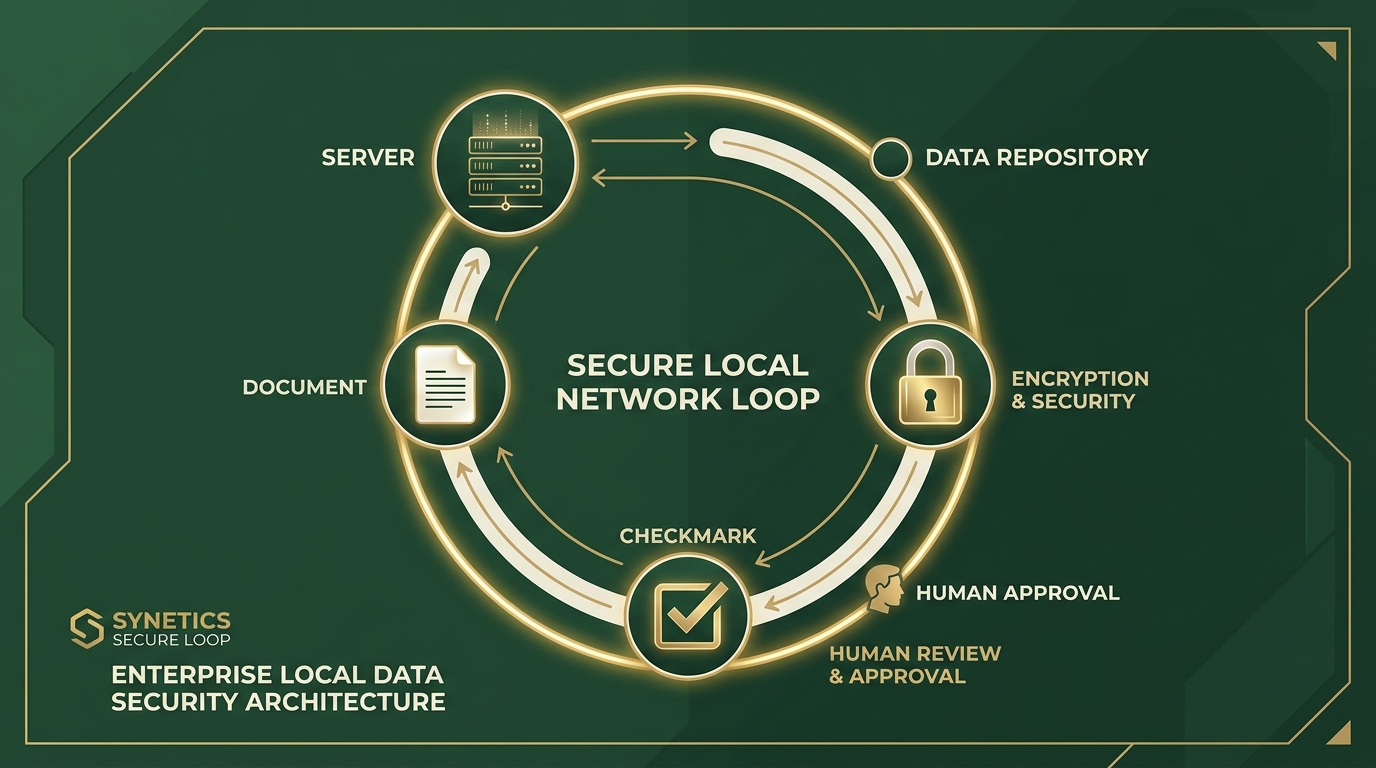
Implementation investment
Final scope follows the architecture review. The figures below are the starting service investment for the delivery posture.
Tier 1
1 Month On-site Setup
€10,000Tier 2 (Concierge)
2 Months On-site Integration
€20,000Tier 3
3 Months On-site Setup
€30,000Hardware procurement (~$16,500 direct cost), travel/housing, and ongoing remote SRE support plans are quoted separately after review.
Platform evidence
We do not write bespoke code from scratch. Your private sanctuary relies on verified modules that power AIOHM's core software daily.
Public/private RAG modes with tenant context. We classify and test every document source before ingestion.
Realised via our native vector search isolation engines.Public-facing chat bots that query only publicly approved knowledge sources, preventing internal data leaks.
Powered by App\Domains\AI\Agents\Specialized\AmbassadorAgent.Departmental checks and human authorization loops before any external publish action proceeds.
Backed by App\Models\AgentApprovalRequest.Clear responsibility
We provide deployment evidence, configuration logs, and the agreed operating runbook. Your organisation retains control of its physical and network policies.
Architecture mapping, secure software installation, local RAG vector scoping, admin/operator training, and remote SLA support.
Physical hardware security, network firewall policies, local data classifications, user access permissions, and legal compliance reviews.
Questions to settle early
No. The architecture review establishes whether local-first, restricted-network, or an air-gapped assessment fits your requirements. Each option has different connector, update, support, and recovery trade-offs.
No. AIOHM can provide an implementation record, data-flow documentation, and agreed configuration evidence. Your organisation remains responsible for its legal, privacy, security, and compliance decisions.
Potentially. The review identifies which sources and workflows stay local, which integrations are approved, and which data must not be processed by AI. External routes are documented rather than assumed.
No. The review defines the workload, evaluates suitable local hardware and model runtimes, and produces a benchmark and bill-of-materials plan before procurement.
The next step
Bring your workload specifications, your compliance boundaries, and the team responsible for operating the result. We will turn them into a tested implementation blueprint.
Request an architecture review